
Hérault · 7 min · September 2026
Saint-Guilhem-le-Désert: a day for two from Montpellier
Saint-Guilhem-le-Désert from Montpellier: Gellone Abbey, the Devil’s Bridge and the Hérault gorges in a single day, before returning to your suite.
Guide prepared by the VÉNUSA team, welcoming guests in the heart of Montpellier.
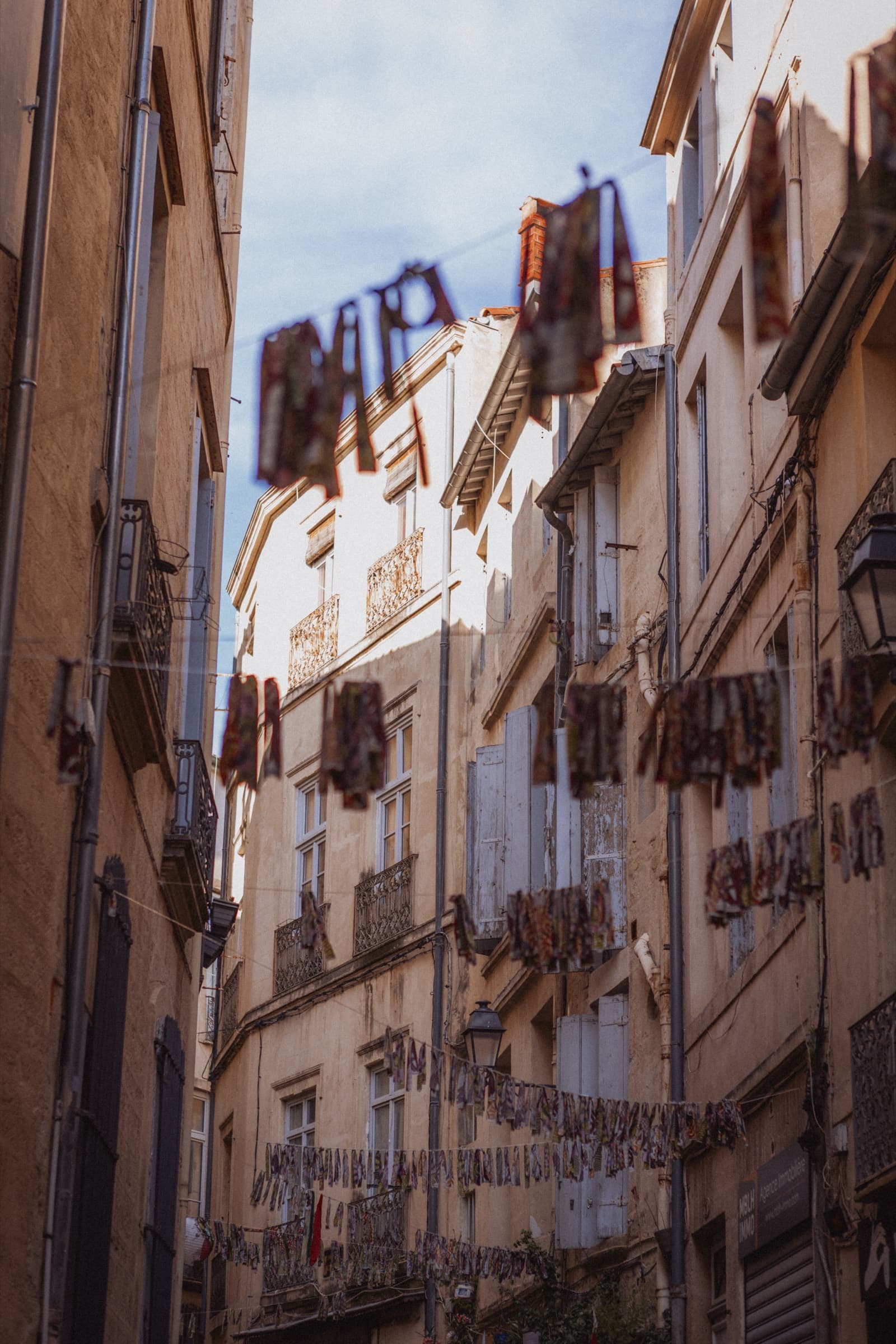
Some outings are simply there to tick off a list; others are still talked about that evening, while soaking in warm water. Saint-Guilhem-le-Désert belongs to the latter. Around forty kilometres north-west of Montpellier, this medieval village lies deep in a narrow valley, between limestone cliffs and garrigue. It is the quintessential stone-and-nature escape: a Carolingian abbey, a Romanesque bridge above a green river, and ridges closing off the horizon. One day is enough, provided you know what you are looking for.
Getting there from Montpellier
The drive takes less than an hour: you leave the plain behind, follow the Hérault valley, and the landscape gradually closes in. Access to the village is regulated, as its lanes are pedestrianised and the site is protected. The principle is simple: leave your car in the large Maison du Grand Site car park, between Aniane and the Devil’s Bridge, then take the shuttle services to the bridge, Clamouse Cave and the village. As the service is seasonal, check the arrangements before setting off.
Without a car, it is possible but more restrictive. A regional coach service links Montpellier with Saint-Guilhem-le-Désert and Clermont-l'Hérault, departing from the Mosson area, which is served by the tram. Services are infrequent: check the timetable in advance and plan your day around it. Our Getting here page details the network from our three addresses.
Gellone Abbey, founded in 804
This is the heart of the village, and the reason it exists. In 804, Guilhem, Count of Toulouse and Duke of Aquitaine, close to Charlemagne, founded an abbey in this valley, then cut off from the world: Gellone. The site became a major spiritual centre in Languedoc, then a sought-after stop on the pilgrimage routes to Santiago de Compostela, thanks to the founder’s tomb and a relic of the Cross. In 1998, the abbey church was inscribed as a UNESCO World Heritage Site as part of these routes.
The building is a landmark of Languedoc Romanesque art: restrained volumes, thick walls, and rare, precise light. One detail is worth knowing before you enter: part of the cloister’s sculptures left the village at the beginning of the 20th century, acquired by an American collector, and are now housed at The Cloisters museum in New York. What you visit here is therefore as much an architecture as an absence. Opening times vary by season, so check them before travelling.
The village, stone and water
Saint-Guilhem has only a few hundred inhabitants and a handful of cobbled, entirely pedestrian lanes. You inevitably walk slowly here: because of the slopes, the steps and the carved lintels above the doors. The Verdus, a small watercourse, runs through the village and can be heard almost everywhere, which makes all the difference in hot weather.
The central square is the natural meeting point, with its monumental plane tree planted in the 19th century, casting shade across the whole space. Above the rooftops, on its rocky spur, the ruins of the Château du Géant watch over the valley. The village is listed among Les Plus Beaux Villages de France and forms part of the Grand Site de France Gorges de l'Hérault.
The Devil’s Bridge, at the mouth of the gorges
Downstream, the Devil’s Bridge spans the Hérault, straddling the communes of Aniane and Saint-Jean-de-Fos, at the entrance to the gorges. It was built at the beginning of the 11th century, between 1025 and 1031, following an agreement between the Abbot of Aniane and the Abbot of Gellone. Two large stone arches, some sixty metres in length, with deep green water below. It has been protected as a historic monument since 1935 and, like the abbey, has been a UNESCO World Heritage Site since 1998.
Its name comes from a medieval legend, invented long after its construction: each night, the Devil would undo the builders’ work. The site is very busy in fine weather; arriving early in the morning transforms the experience entirely.
Clamouse Cave, beneath the garrigue
A few hundred metres upstream from the bridge, in the commune of Saint-Jean-de-Fos, lies Clamouse Cave. Open to visitors since the 1960s, it is remarkable for the richness of its formations: tubular stalactites, draperies, eccentric formations and, above all, aragonite crystals that form veritable stone flowers.
It is also the ideal refuge when the sun is blazing: the temperature remains cool and constant throughout the year. Bring a light jacket, even at the height of summer, and non-slip shoes. Check the access conditions before making the detour.
Walking to the Cirque de l'Infernet
For a proper breath of fresh air, head up the valley. From the village square, Rue du Bout du Monde fully lives up to its name: it leads towards the Cirque de l'Infernet, an amphitheatre of limestone cliffs closing off the Gellone valley. Its local name, the “Cirque du Bout du Monde”, says everything about the feeling it evokes.
Several routes begin here, from a simple out-and-back walk along the stream to the Fenestrettes path, an old mule track built in dry stone. It is up to you to adjust your plans to the day’s heat. If you enjoy walking together, our selection of walking routes near Montpellier extends the day.
How to plan your day
The classic trap is trying to fit everything in: you would spend more time travelling than looking around. An order that works well is the Devil’s Bridge in the early morning, when the light is low and visitor numbers are low; the cave in the middle of the day, away from the heat; then the village and abbey in the late afternoon, when the lanes empty and the stone turns ochre.
As you pass back through the plain, you are also not far from the estates featured in our escape to the vineyards of Hérault.
Frequently asked questions about a day in Saint-Guilhem-le-Désert
Can you visit Saint-Guilhem-le-Désert without a car from Montpellier?
Yes, a regional coach service links Montpellier with the village, departing from the Mosson area served by the tram. Services are limited: plan the day around the timetable and check it before setting off.
Do you need a full day to visit Saint-Guilhem-le-Désert?
Half a day is enough for the village and Gellone Abbey. A full day becomes necessary once you add the Devil’s Bridge, Clamouse Cave or the Cirque de l'Infernet. It is better to choose two sites rather than three, and leave room for unplanned moments.
What is the best time of year to go as a couple?
Spring and early autumn offer the best conditions: gentle light, manageable temperatures and fewer visitors than at the height of summer. In July and August, set off early or favour the end of the day in the village. Winter has its own austere charm, but some sites reduce their opening: check the timetables before travelling.
In the evening, the coolness of stone in Montpellier
A day of stone and garrigue brings a particular kind of tiredness, the sort that comes from your legs and the light. That is exactly the moment our suites with private jacuzzis are made for. You return to the city centre, open a door, and the day settles away.
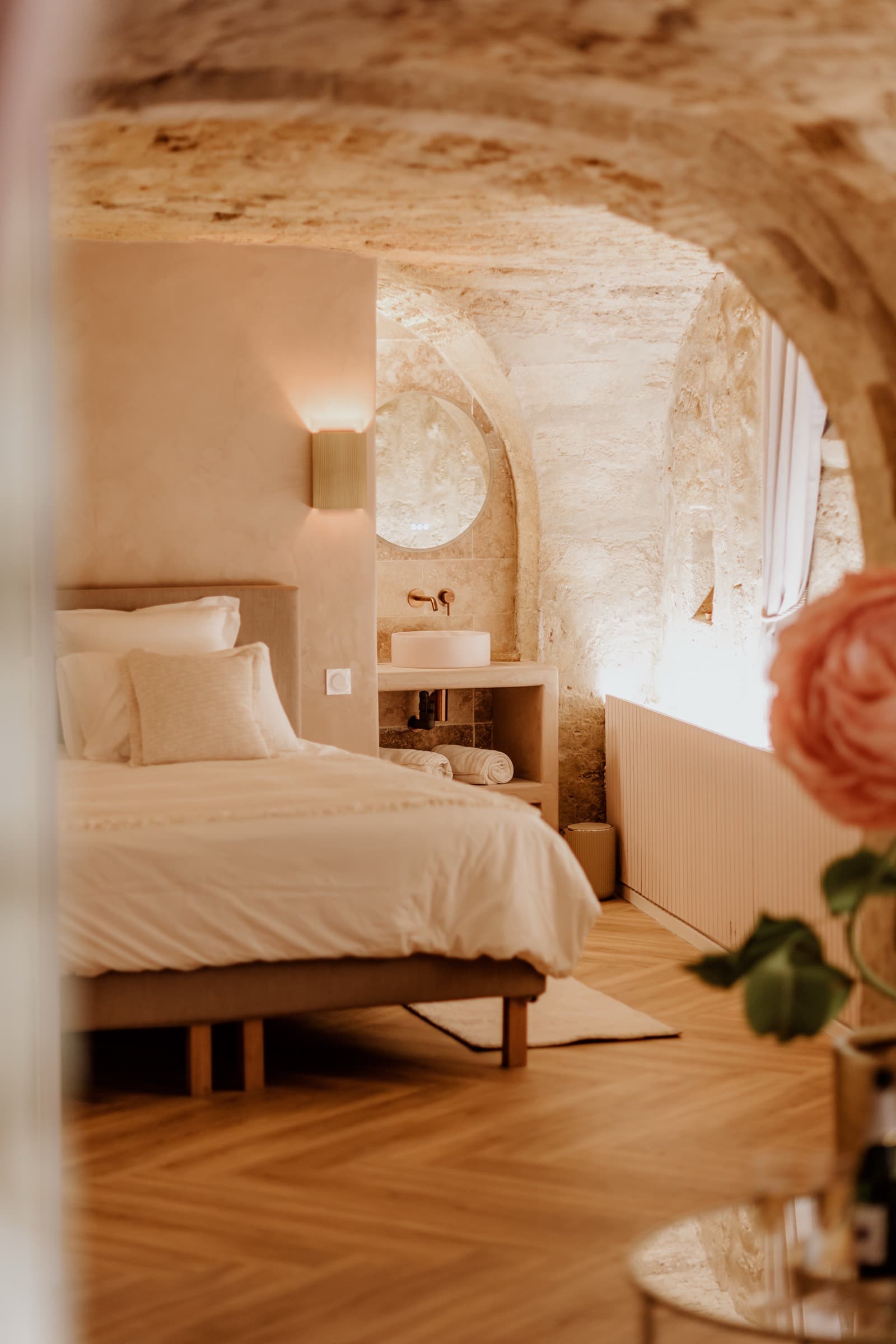
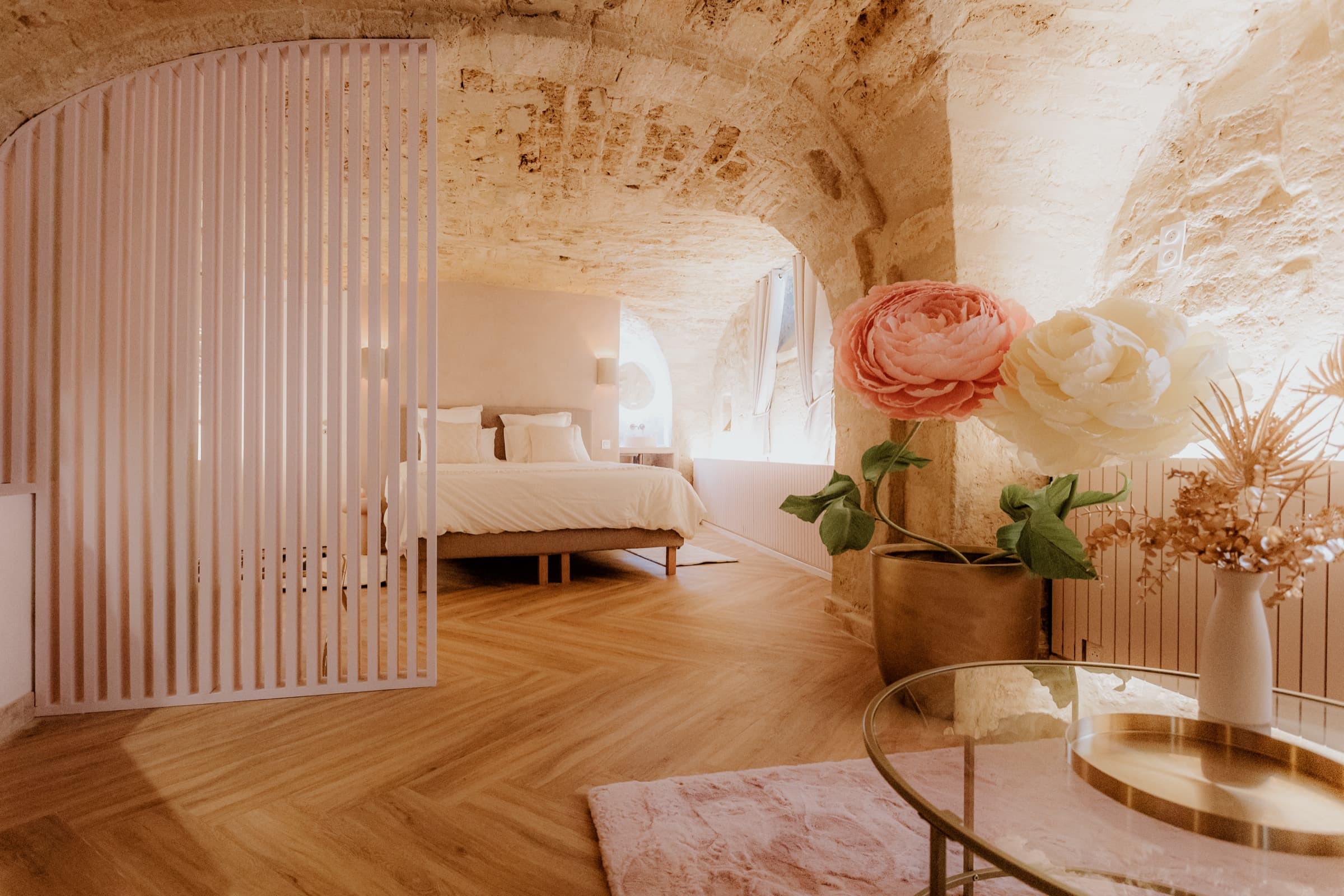
The Saint-Roch suite, set beneath a vaulted cellar of exposed stone, rather naturally extends the mood of the day: its vault retains a natural coolness that is welcome after hours in full sunshine. The other two have their own character, to discover on the our suites page. A private spa for the two of you alone, with no timetable or neighbours, and the day takes a different turn.
You can create your own escape before arrival: a chilled bottle waiting for you, a couples’ massage. And to give this day as a gift, our gift cards allow the recipient to choose their own date.
Keep reading
Hérault · 7 min
Sète for couples: a day trip from Montpellier
Hérault · 6 min
Romantic picnic in Hérault: 8 spots

Hérault · 6 min
A Romantic Escape in the Vineyards of Hérault
Montpellier · 2 min
Book Direct or via Booking/Airbnb: What Changes in Montpellier
Montpellier · 2 min
The checklist for a successful night in a spa suite in Montpellier
Montpellier · 3 min
Price of a night in a suite with private jacuzzi in Montpellier

Your moment in Montpellier
Three suites with a private jacuzzi, in the heart of the city. Book direct.