
Hérault · 7 min · August 2026
Sète for couples: a day trip from Montpellier
A romantic day in Sète from Montpellier: the canals, Mont Saint-Clair, the marine cemetery, and a return to your suite for the night.
Guide prepared by the VÉNUSA team, welcoming guests in the heart of Montpellier.
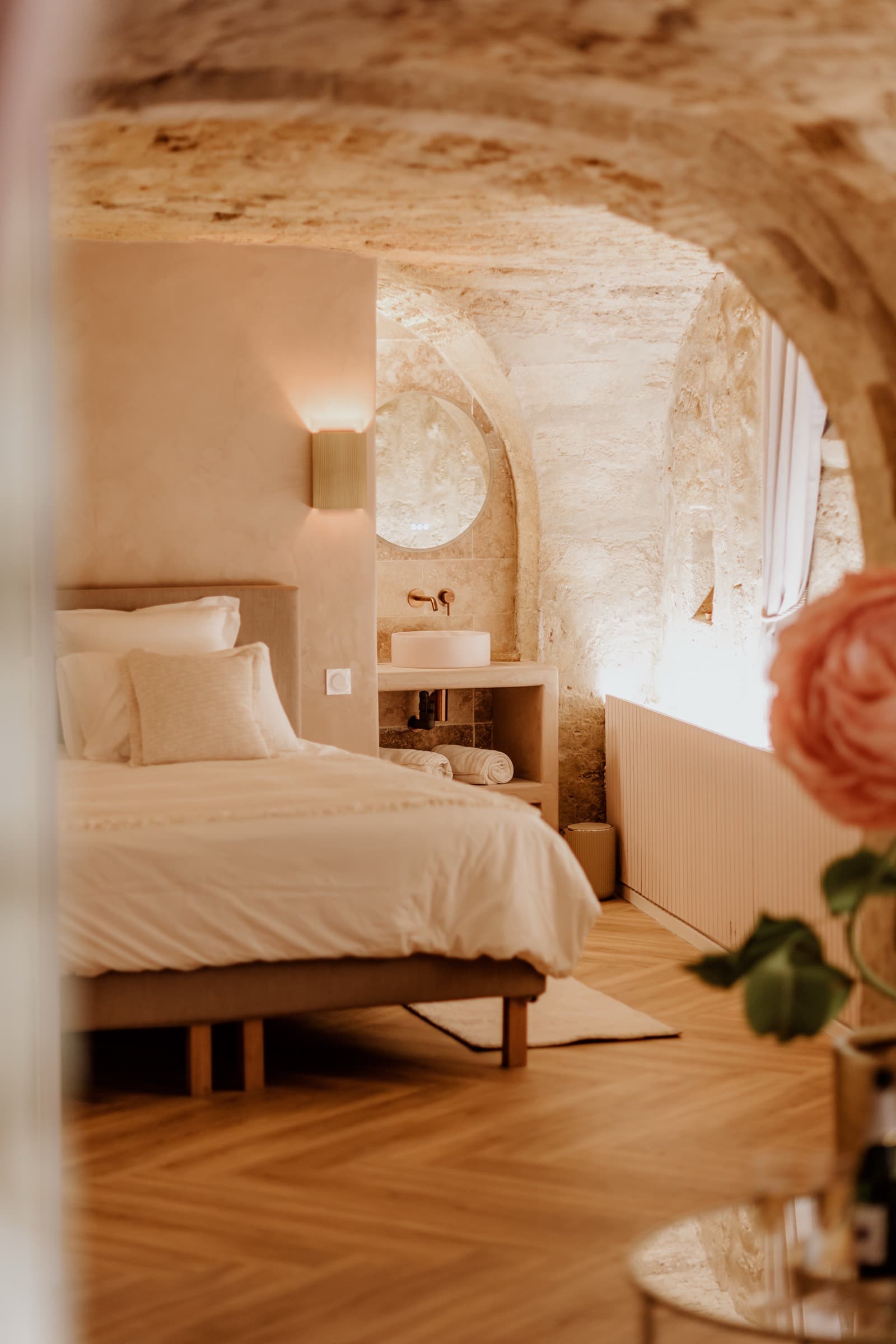
Of all the possible outings from Montpellier, Sète is the obvious choice. Around thirty kilometres away, with a direct train, it is a city unlike any other: canals running through its streets, a hill rising from the sea, a cemetery suspended above the Mediterranean. Spend the day there, walk at length, watch the water for a while. Then, in the evening, return to Montpellier and the peace of your suite. Here is how to shape this day for two.
Why Sète is the ideal day trip
Sète sits on a strip of land between the Mediterranean and the Étang de Thau, backed by an isolated hill. This unlikely geography has earned it two nicknames: “the singular island” and “the Venice of Languedoc”. The city owes its existence to Louis XIV, who wanted a Mediterranean outlet for the Canal du Midi: the first stone of the Saint-Louis breakwater was blessed there in 1666, marking the birth of the port.
For a couple, the appeal is simple: everything can be done on foot, everything fits into one day, and there is no need to rush. No luggage, no accommodation to find once there, no check-in time to meet. You return whenever you wish.
Getting there from Montpellier
The simplest option remains the train. Regional services connect Montpellier Saint-Roch station with Sète station several times a day, for a journey measured in minutes rather than hours: less than half an hour from platform to platform. Check the timetables on the morning itself, as they vary by day.
When staying in the city centre, the advantage is that the station is only a few minutes’ walk from our three suites. It is precisely the approach described in our guide to arriving by train and enjoying Montpellier without a car: leave the Saint-Roch suite, walk up to the station, and the day begins. Our Access page details the walk from each address.
Driving is also possible, but the train saves you from having to find a space, which is no small matter in such a compact city.
The canals, the city’s backbone
From the station, it takes only a few minutes to reach the quays. The Canal Royal runs through the centre and links the Étang de Thau with the Mediterranean: it is the axis around which the entire city is organised. Walk beside the water, cross the bridges, and pass fishing boats with brightly coloured hulls and tall façades reflected in the canal.
The stretch between Pont de la Civette and Pont de la Savonnerie has a name: the Cadre Royal. This is where the nautical jousting tournaments take place, a Languedoc tradition born with the port in 1666. Two jousters, each standing on a raised platform known as a tintaine, try to knock one another into the water, lance forward and wooden shield on the arm. The main tournaments are held at the end of summer; if you hope to see one, check the calendar before you go.
A walk along the quays, with no destination in mind, is already a wonderful way to spend a morning together.
Climbing Mont Saint-Clair
This is the turning point of the day. Mont Saint-Clair, which rises to around 175 metres, overlooks the whole city. You can climb it on foot, along steep lanes and stairways winding between the houses, or take the bus if you would rather save your legs.
At the top, the panorama is striking: on one side, the Mediterranean stretching as far as the eye can see; on the other, the Étang de Thau and its oyster beds laid out across the water. A chapel stands at the summit, and several arranged viewpoints offer somewhere to sit for a while. Bring comfortable shoes and water: the climb is short but steep, and shade is scarce in summer.
This is the moment in the day when you become a little quieter. The sort of view that makes conversation more peaceful.
The marine cemetery, and the other cemetery
On the Mediterranean-facing slope of Mont Saint-Clair, terraced above the open sea, lies the former Saint-Charles cemetery. It is now known as the marine cemetery, in tribute to the poem by Paul Valéry, who was born in Sète in 1871 and buried there in 1945. The setting has an austere beauty: white paths, cypress trees, and the Mediterranean below, exactly as in the poem. Theatre director Jean Vilar is also buried there.
Just above it, on a terrace overlooking the cemetery and the sea, the Paul Valéry Museum occupies a building open to the landscape. The view from its surroundings alone makes the visit worthwhile.
One useful clarification, as many visitors get it wrong: Georges Brassens, born in Sète in 1921, is not buried in the marine cemetery but in Le Py cemetery, the city’s other cemetery, which faces the Étang de Thau.
La Pointe Courte, the breakwater and the water’s edge
If you still have time in the afternoon, there are two directions to choose from.
First, La Pointe Courte: a former fishermen’s district with its feet in the Étang de Thau, made up of small low houses, drying nets and moored boats. Agnès Varda filmed her first film there, and the place has retained something of that simplicity. Walk slowly; do nothing more than look.
Then, the Saint-Louis breakwater: the port’s long historic jetty, extended by a lighthouse, which you can follow to its end and find yourself surrounded by water on both sides. At sunset, it becomes something else entirely.
Sète is also home to a municipal museum devoted to modest arts, created in 2000 by artists Hervé Di Rosa and Bernard Belluc. Check its address and opening times before making the journey.
The return, and the night that follows
This is where the day finds its balance. Take the train back in the late afternoon or early evening, for a short journey along the coast, and you are back in the Écusson. Salt on your skin, legs heavy from the climb, and nothing left to arrange.
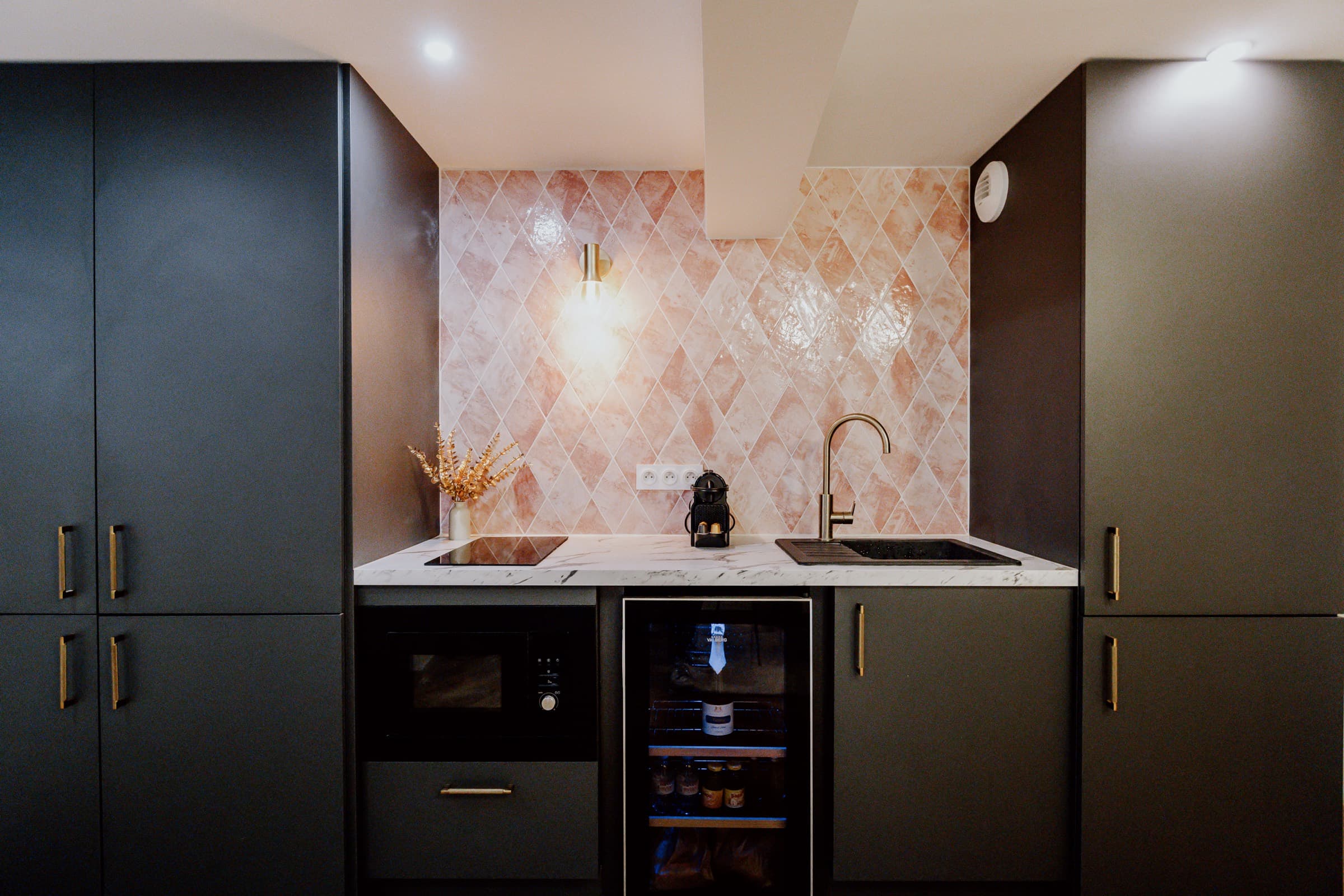
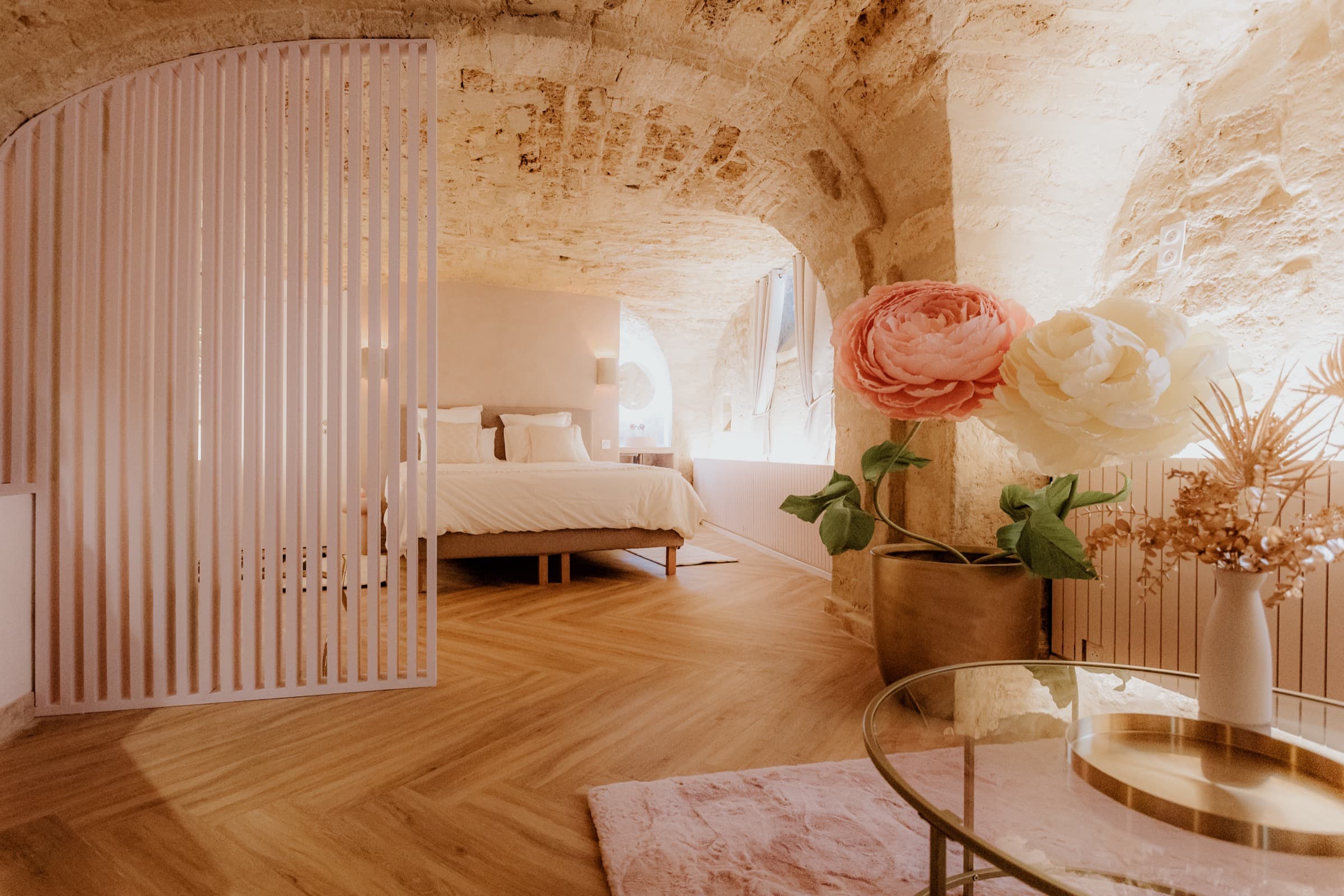
Our three suites with private jacuzzis are all in the city centre: the Comédie suite with its flowered wall, the Jean Jaurès suite with its jacuzzi beneath a starry sky, and the Saint-Roch suite with its 17th-century vaulted cellar. After a day of walking and sea air, hot water is not up for debate. That is exactly what these suites are for: bringing back calm after movement.
You can also shape your escape in advance, so that the bottle is already chilled when you return. And if you are giving this stay as a gift, our gift card lets the recipient choose their own date.
Frequently asked questions
Is one day enough to visit Sète from Montpellier?
Yes, easily, provided you do not try to see everything. The canals in the morning, Mont Saint-Clair and the marine cemetery around the middle of the day, then La Pointe Courte or the breakwater in the late afternoon: it is a full but manageable itinerary on foot. If you also want to add the beach, it is better to forgo something else or return on another day.
Do you need a car to enjoy Sète?
No. The station is close to the centre, and the essentials can be explored on foot. Only the climb to Mont Saint-Clair requires some effort, which can be avoided by taking the bus. Arriving by train also removes the question of parking, which becomes more complicated in season.
Can you combine Sète with a beach day?
Yes, the coastline stretches for several kilometres beyond the city, but that makes for a lot in a single day. A good option is to devote one day to Sète and another to the beaches accessible from Montpellier, returning each evening to the same suite. You only need to unpack once.
Keep reading
Hérault · 5 min
A romantic weekend in Hérault: two nights in Montpellier, one day trip
Hérault · 7 min
Saint-Guilhem-le-Désert: a day for two from Montpellier
Hérault · 6 min
Romantic picnic in Hérault: 8 spots

Hérault · 6 min
A Romantic Escape in the Vineyards of Hérault
Montpellier · 5 min
Weekend with a jacuzzi in Montpellier: one night or two?
Montpellier · 4 min
Gift voucher for a romantic night in Montpellier

Your moment in Montpellier
Three suites with a private jacuzzi, in the heart of the city. Book direct.